
Top Reasons to Choose Leading Vertical Baler Machine Manufacturers for Your Factory
- Home
- Top Reasons to Choose Leading Vertical Baler Machine Manufacturers for Your Factory
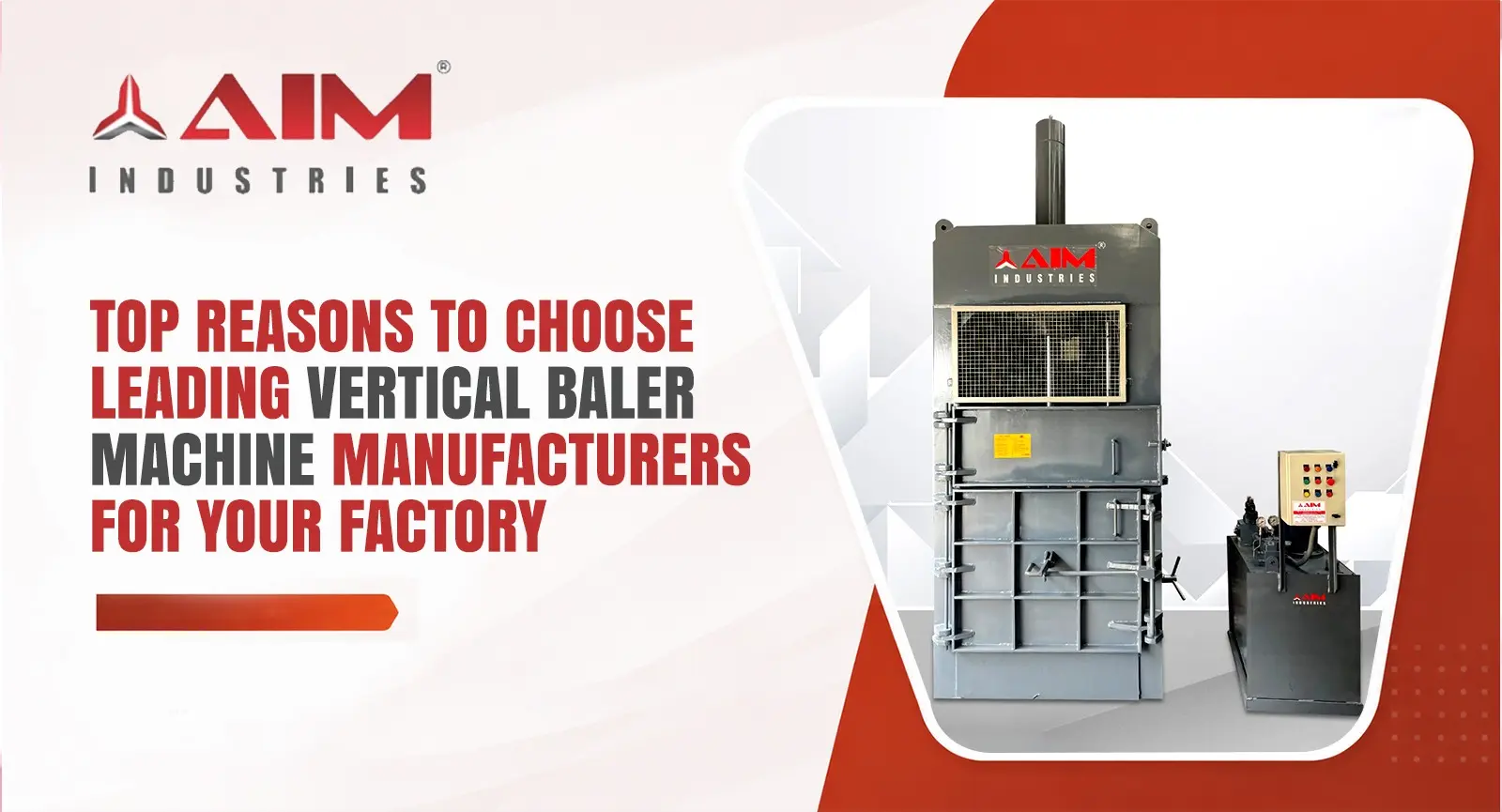
Vertical baler machines compress loose waste such as cardboard, paper, plastic film and textile scrap into tight, tied bales. This saves space, cuts handling and transport costs and often earns a better price for scrap. But a baler works hard every day, so the maker matters as much as the machine. Strong build quality, the right sizing, safety features, genuine parts and good service are the main reasons to choose a leading manufacturer.
Table of Contents
Introduction
Every factory, warehouse and packaging unit produces waste. Cardboard boxes pile up near the dock. Plastic film clogs corners. Paper scrap fills bins faster than they can be emptied. Loose waste takes up space, creates a fire risk and costs money to remove.
A baler solves this by turning the pile into compact blocks that are easy to store and sell. But the machine you get depends heavily on who builds it. This blog explains how vertical baler machines work and why the choice of manufacturer matters as much as the machine itself.
What Are Vertical Baler Machines?
Vertical baler machines are hydraulic presses that squeeze loose, bulky waste into compact blocks called bales. The machine has an upright chamber. The operator fills the waste from the front or the top, a press plate moves down and compresses it, and the finished bale is tied with wire or strapping and pushed out.
They are popular because they are compact, simple to use and lower in cost than large horizontal systems. A factory, a warehouse, a packaging unit or a shop can place one in a small corner, and use it every day.
How Does a Vertical Baler Work?
The working of a vertical baler is explained below:
- The operator opens the door and loads the waste into the chamber.
- After the door is closed, the machine is started from the control panel.
- A motor drives a pump in the power pack, which sends oil to the hydraulic cylinder.
- The cylinder pushes the press plate down with great force and compresses the material.
- When the bale has reached the right density, the plate stays down while the operator ties the bale with wire or straps.
- The plate rises, the door opens and the bale is taken out.
The key figure is the press force, which is measured in tonnes. A higher force gives a denser bale, but it also needs a stronger frame and cylinder.
Problems a Baler Solves in a Factory
Loose waste is a quiet source of loss. Here is what a vertical baler machine fixes.
- Lack of space: loose cardboard and film pile up and block walkways and storage areas.
- High disposal cost: a truck carries far less loose waste than baled waste.
- Poor scrap value: recyclers usually pay better for clean, tightly baled material.
- Fire risk: heaps of loose paper and packaging burn easily.
- Untidy work areas: waste scattered around slows work and looks unprofessional.
- Pests and dust: loose waste attracts both.
- Labour time: staff spend less time moving and sorting loose scrap.
In many plants, the machine pays for itself through better scrap income and lower handling cost.
Materials Vertical Baler Machine Can Handle
- Cardboard and corrugated boxes
- Paper and office waste
- Plastic film and shrink wrap
- PET bottles and plastic containers
- Textile and garment scrap
- Aluminium cans and light metal scrap
- Foam, cotton and packing material
- Cut-offs from packaging and printing units
Different materials spring back differently, so the baler should be chosen to match the material you handle most.
Top Reasons to Choose a Leading Manufacturer
Many balers look alike in photos, but their working life can differ widely. When you compare vertical baler machine manufacturers, these are the reasons a leading name is worth the extra attention.
1. Stronger build quality
A baler works under heavy pressure many times a day. Leading makers use thick steel plates, good welding and a rigid frame, so the machine does not bend or crack. A weak frame leads to misalignment, jams and early failure.
2. Reliable hydraulics
The cylinder, pump, valves and seals decide how smoothly the machine runs. Good makers use quality components and test them properly. This means fewer oil leaks, steady pressure and a longer working life.
3. The right size for your waste
A good manufacturer asks about your material, your daily volume and your space before recommending a model. They can adjust the chamber size, the press force and the bale size, so you do not pay for power you do not need, or struggle with a machine that is too small.
4. Better safety design
Safe operation is not optional. Look for door interlocks, an emergency stop, guards, an overload valve and clear warning labels. Leading makers design these into the machine from the start.
5. Testing and documentation
A reliable supplier tests each machine before dispatch and provides a manual, a wiring diagram and a warranty in writing. This helps your team install, operate and repair the machine without confusion.
6. Easy availability of spares
A baler stops when a seal, a hose or a switch fails. Leading manufacturers keep common spares in stock and ship them quickly, which keeps your downtime short.
7. After-sales service and training
Good support includes installation, operator training and a quick response when something goes wrong. This matters most in the first few months, when your team is still learning the machine.
8. Consistent performance and lower running cost
A well-built machine has stable cycle times and an efficient motor and hydraulic system, so it uses less power per bale. Over the years, this saves more money than a small difference in purchase price.
9. Proven references
Experienced makers can show you working machines in similar factories. Speaking to those users is one of the best ways to judge real performance.
Conclusion
The right baler can turn a messy waste problem into a clean, space-saving and even profitable routine. Vertical baler machines are simple to use, but their performance, safety and life depend on how well they are built and supported. Choosing an experienced manufacturer, testing the machine on your own waste and checking service support protects your investment. If you need dependable balers in standard or customised sizes, in bulk or for a single factory, you can get in touch with Aim Industries, a manufacturer and supplier known for quality products and technical support.
Frequently Asked Questions
The operator loads waste into the chamber, and a hydraulic cylinder pushes a press plate down to compress it. The bale is tied and pushed out when the cycle is done.
Cardboard, paper, plastic film, PET bottles, textile scrap, aluminium cans and similar light, bulky materials.
A vertical baler is compact, lower in cost and loaded by hand. A horizontal baler is larger, often automatic and suits very high volumes.
Check the material, the daily volume, the press force, the bale size, the power supply and the space available. Ask the manufacturer to recommend a model.
For most factories with regular waste, yes. It saves space, reduces handling and transport cost and can improve the price you get for scrap.
Life depends on the build quality, the workload and the care it receives. A well-made, well-maintained machine can serve for many years.

[mc4wp_form id=501]
About Company
AIM Industries, established in 2014, is a leading manufacturer and exporter of advanced waste & material management machinery. We ensure superior quality and precision by performing all critical component manufacturing in-house at our state-of-the-art facilities in Ahmedabad, India. Our machinery serves a wide array of sectors globally, including woven sack bags, scrap processing and recycling, tarpaulin, textile, corrugated box and paper, government bodies, and the fertilizer and chemical industries.
AIM Industries @2026. All Rights Reserved. Powered by Eye4Future